Introduction to Remote Monitoring and Management (RMM) Solutions
Remote Monitoring and Management (RMM) solutions are software platforms that allow IT professionals to remotely manage and monitor computer systems and networks. They offer a centralized dashboard for overseeing various aspects of a company’s IT infrastructure, enabling proactive issue resolution and improved operational efficiency.
RMM solutions are becoming increasingly crucial for businesses of all sizes, as they provide a robust approach to managing IT infrastructure in a more streamlined and cost-effective manner. This technology helps businesses respond quickly to emerging issues and maintain optimal performance, ultimately boosting productivity and reducing downtime.
Different Types of RMM Solutions
RMM solutions cater to diverse needs, and different deployment models cater to different organizational setups. Understanding these distinctions is key to selecting the right solution for your business.
| Solution Type | Key Features | Benefits |
|---|---|---|
| Cloud-Based | Hosted on remote servers, accessible via the internet. Typically subscription-based, offering scalability and flexibility. Often feature real-time monitoring, automated reporting, and integrations with other cloud services. | Scalability and flexibility are major advantages. Cost-effective in the long run, with predictable monthly fees, avoiding large upfront investments. Accessibility from anywhere with an internet connection. Easy upgrades and maintenance. |
| On-Premises | Installed and maintained on a company’s own servers. Offers greater control and customization, allowing tailored configurations. Provides higher levels of data security, as data remains within the company’s network. | Provides more control over the system, which is vital for organizations with strict security requirements or sensitive data. The data resides within the organization’s infrastructure, ensuring compliance with regulatory requirements. Less dependence on third-party services. |
Core Functionalities of RMM Solutions
RMM solutions provide a comprehensive suite of tools for managing IT infrastructure remotely. These functionalities are crucial for efficient IT operations.
- Remote Control: Allows IT staff to access and control remote devices, facilitating troubleshooting and maintenance without physical presence.
- Software Deployment: Enables the automatic installation and updating of software across multiple systems, streamlining deployment processes and ensuring consistency.
- Patch Management: Automates the patching of operating systems and applications, mitigating security risks and ensuring systems are up-to-date.
- System Monitoring: Tracks system performance metrics, identifying potential issues before they escalate into major problems, allowing for proactive maintenance.
- Inventory Management: Provides a centralized view of all devices and software installed on the network, making it easier to track assets and manage licenses.
Benefits of Implementing an RMM Solution
Implementing an RMM solution offers significant advantages for businesses, improving efficiency and reducing operational costs.
- Reduced IT Costs: Streamlined processes and proactive maintenance minimize the need for expensive on-site visits and repairs, ultimately lowering IT costs.
- Improved Efficiency: Automation of tasks like software deployment and patching frees up IT staff to focus on higher-value projects, boosting overall efficiency.
- Enhanced Security: Proactive monitoring and patching minimize vulnerabilities, enhancing the overall security posture of the IT infrastructure.
- Increased Productivity: Reduced downtime and faster issue resolution contribute to increased productivity and efficiency across the organization.
- Data Backup and Recovery: Integrated data backup and recovery capabilities protect critical data and ensure business continuity in case of system failures.
Key Features and Capabilities of Top RMM Solutions
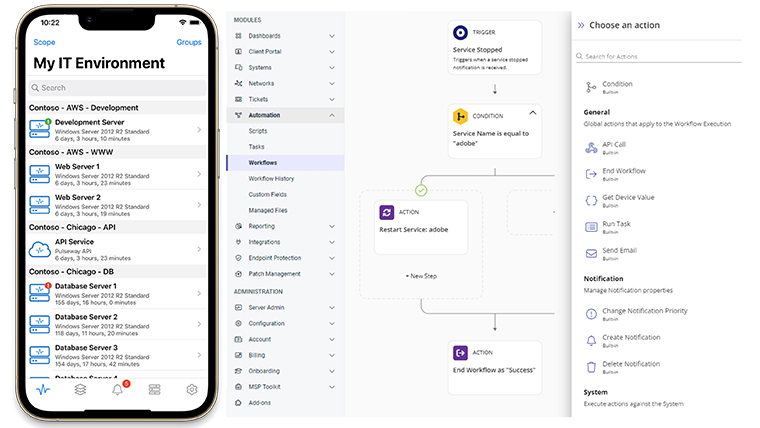
Remote Monitoring and Management (RMM) solutions are crucial for efficiently managing and supporting computer systems, especially for businesses with multiple locations or a large number of devices. Top-tier RMM solutions provide a comprehensive suite of tools that streamline IT operations, enhance security, and improve overall system performance.
These powerful platforms offer a range of functionalities, from remote control and software deployment to comprehensive system monitoring. Understanding the key features and capabilities of various RMM solutions is vital for businesses seeking to optimize their IT infrastructure and improve the user experience.
Remote Control Capabilities
RMM solutions empower IT professionals to remotely access and control computers and devices. This allows for troubleshooting, software installation, and data recovery, without the need for physical presence. Advanced solutions often provide granular control over individual devices, allowing for precise execution of tasks. This capability is especially valuable for businesses facing urgent issues or needing quick support for remote users.
Software Deployment and Patch Management
Streamlining software deployment is a core strength of many RMM solutions. They allow for the automated installation and updates of software across multiple devices, significantly reducing the time and resources needed for manual processes. Similarly, patch management features automatically apply critical security updates to systems, minimizing the risk of vulnerabilities and enhancing overall security posture. This efficiency translates to cost savings and reduced downtime.
System Monitoring and Reporting
Effective system monitoring is crucial for proactively identifying potential issues and preventing outages. RMM solutions often provide real-time monitoring of key system metrics, including CPU usage, memory consumption, and disk space. This continuous monitoring allows for the prompt identification of anomalies and the implementation of corrective measures. The reporting features generated by these solutions are invaluable for IT managers, providing insights into system performance and trends over time.
Comparison of Prominent RMM Solutions
The table below compares three prominent RMM solutions, highlighting their pricing models, support options, and key features. This comparison should aid in choosing the solution that best aligns with specific business needs and budget.
| RMM Solution | Pricing | Support | Key Features |
|---|---|---|---|
| Solution A | Starts at $XX per device/month; tiered pricing for larger deployments. | 24/7 phone and email support; knowledge base; online community forums. | Remote control, software deployment, patch management, system monitoring, customizable dashboards, reporting. |
| Solution B | Per-user pricing; varying plans for different levels of support and features. | Dedicated account manager; 24/7 phone support; comprehensive online documentation. | Remote control, automated software deployment, advanced system monitoring, custom reporting, mobile app for on-the-go management. |
| Solution C | Subscription-based pricing, with options for add-ons. | Online chat support; FAQs; knowledge base; community forum. | Remote control, software deployment, patch management, real-time monitoring, integrated security features, advanced reporting and alerting. |
Considerations for Choosing an RMM Solution
Choosing the right Remote Monitoring and Management (RMM) solution is crucial for businesses looking to optimize their IT infrastructure and enhance operational efficiency. A well-chosen RMM solution can streamline IT tasks, reduce downtime, and improve overall productivity. However, the market offers a wide array of RMM solutions, each with its own strengths and weaknesses. Careful consideration of several key factors is essential for making an informed decision.
Selecting an RMM solution requires a thorough evaluation of the specific needs and resources of a business. This evaluation should go beyond just the initial cost and consider the long-term value proposition, including scalability, reliability, and the quality of customer support. A well-implemented RMM system can transform IT operations from reactive to proactive, minimizing issues and maximizing efficiency.
Scalability
RMM solutions need to grow with the business. A solution that can adapt to changing needs and accommodate future expansion is vital. Companies that anticipate growth should prioritize scalability. A solution that struggles to handle an increasing number of devices or users can quickly become a bottleneck and a significant source of frustration. Consider how many devices you anticipate managing now and in the next 3-5 years. A scalable RMM will easily adapt to these changing demands.
Reliability
Reliability is paramount in an RMM. Downtime or frequent system failures can lead to significant disruptions and lost productivity. Businesses need an RMM solution that consistently delivers reliable performance. Look for solutions with a proven track record of uptime and a robust infrastructure. Reviews and testimonials from other businesses can offer insights into the reliability of different RMM solutions. Consider how critical your IT infrastructure is to your business operations and how much downtime is acceptable.
Security
Security is a top priority in any IT infrastructure, and RMM solutions are no exception. A secure RMM protects sensitive data and prevents unauthorized access. Businesses should prioritize RMM solutions with robust security features, including encryption and access controls. Thorough research into the security protocols and practices of different solutions is crucial. Data breaches can have severe financial and reputational consequences.
Customer Support and Ongoing Maintenance, Top rmm solutions
Effective customer support and ongoing maintenance are essential for the long-term success of an RMM solution. Reliable support is critical for troubleshooting issues, addressing problems, and maximizing the return on investment. Without adequate support, businesses may struggle to use the software effectively. Consider the support channels available (phone, email, ticketing system) and the response times. A well-maintained RMM system ensures optimal performance and addresses any issues proactively.
Factors to Evaluate Support and Maintenance
- Response Time: How quickly does the support team respond to queries and requests? Faster response times are crucial for minimizing downtime and resolving issues efficiently. Consider the average time it takes to resolve common problems.
- Support Channels: Does the vendor offer multiple support channels, such as phone, email, or live chat? Having diverse support options can be beneficial for different situations.
- Documentation and Knowledge Base: A comprehensive knowledge base and well-documented user manuals can significantly reduce the need for direct support interactions. Easy access to information is a major advantage.
- Maintenance Updates: Regular updates and patches are essential for maintaining the security and functionality of the RMM solution. Look for solutions with a clear update schedule and proactive security patches.
- Contractual Obligations: Understand the terms of any support contracts, including the level of support included and any associated costs. Review the support offerings carefully and understand the implications of your chosen contract.
Implementation and Deployment Strategies
Deploying an RMM solution effectively hinges on meticulous planning and execution. A well-defined strategy ensures smooth integration and maximizes the solution’s potential for optimizing IT operations and improving efficiency. This includes careful consideration of existing infrastructure, potential disruptions, and the specific needs of your organization. A thorough understanding of your current IT landscape and future goals is paramount.
Proper planning and preparation before implementation are crucial. This stage isn’t just about installing software; it’s about ensuring a seamless transition. It involves identifying potential obstacles, creating a realistic timeline, and allocating resources appropriately. This proactive approach minimizes surprises and maximizes the likelihood of a successful rollout.
Planning and Preparation
Careful planning is essential to a successful RMM deployment. This involves a comprehensive assessment of your current IT infrastructure, including the types of devices, operating systems, and existing management tools. Understanding your current workflows and processes is equally important to determine where the RMM solution can best streamline your IT operations. Documenting existing procedures, identifying potential conflicts, and outlining clear communication channels are crucial aspects of preparation. Budgeting, resource allocation, and training requirements must also be meticulously considered.
Configuration and Customization
Tailoring an RMM solution to your specific needs is vital for optimal performance. This process involves configuring various settings, such as user roles, access permissions, and reporting parameters. Customizing the solution to reflect your organization’s unique structure and processes is key to realizing the full potential of the RMM. For instance, configuring specific alerts for critical system events or customizing reporting dashboards to provide tailored insights are critical steps. Thorough documentation of these configurations is essential for future maintenance and troubleshooting.
Deployment Process
A step-by-step approach to deployment ensures a smooth transition. A well-structured deployment process reduces the risk of errors and allows for more controlled management. Implementing the solution in phases, for example, allows for testing and validation at each stage.
- Assessment and Planning: Thoroughly analyze your current IT infrastructure and identify the specific needs that the RMM solution will address. Document all relevant details, including device inventories, software versions, and existing support protocols. This step is crucial for ensuring that the RMM solution aligns with your organizational requirements.
- Agent Installation: Install the RMM agent software on each managed device. This often involves remote access, so ensure that the necessary permissions and configurations are in place. This is a critical step for the RMM solution to function effectively.
- Initial Configuration: Configure the RMM solution to your specific needs. This includes defining user roles, access permissions, and other relevant settings. This step allows you to customize the RMM solution for optimal performance.
- Testing and Validation: Test the functionality of the RMM solution thoroughly to ensure that it meets your requirements and expectations. This includes testing the various features and reporting capabilities of the solution.
- Phased Deployment (Optional): If appropriate, deploy the RMM solution in phases to minimize disruption and allow for gradual adoption. This method ensures a controlled transition to the new system.
- Ongoing Monitoring and Maintenance: Regularly monitor the RMM solution’s performance and make necessary adjustments to maintain optimal functionality. Addressing issues promptly is crucial for minimizing disruptions and maximizing the solution’s efficiency.
Remote Control and Management Tools: Top Rmm Solutions
Remote Monitoring and Management (RMM) solutions go beyond simple monitoring; they provide powerful remote control and management tools. These tools allow IT professionals to proactively address issues, streamline maintenance tasks, and ensure optimal system performance across a diverse range of devices and networks.
Remote control and management tools within an RMM solution empower IT teams to access and manage computers and servers remotely. This capability is crucial for quick troubleshooting, efficient maintenance, and the overall health of a network. By offering centralized control, these tools significantly reduce downtime and improve operational efficiency.
Remote Control Features
Remote control capabilities in RMM solutions allow IT staff to access and interact with remote devices as if they were physically present. This includes the ability to execute commands, view system information, and perform various tasks. Crucially, these tools typically provide a secure connection to protect sensitive data during remote access.
Troubleshooting and Maintenance
Remote control tools significantly enhance troubleshooting and maintenance. Instead of waiting for on-site visits, IT professionals can quickly diagnose problems, identify the root cause, and implement solutions remotely. This minimizes downtime, reduces support costs, and enables a faster resolution of issues, whether for individual computers or an entire network. This proactive approach saves time and resources compared to traditional methods.
Remote Access, Patching, and Updates
Remote access is a cornerstone of RMM solutions. It allows IT personnel to connect to remote systems to perform tasks, monitor system health, and apply updates. Secure remote access protocols are essential for protecting sensitive data during these operations.
Patching and update management are streamlined by RMM solutions. These tools allow IT staff to schedule and deploy security patches and software updates efficiently across multiple devices, ensuring systems remain protected and running optimally. Automated patching minimizes manual intervention and potential errors, leading to significant cost savings and reduced risk of vulnerabilities.
Comparison of RMM Solutions
The following table compares the key remote control and management tools offered by three different RMM solutions:
| RMM Solution | Features and Functionalities |
|---|---|
| Solution A |
|
| Solution B |
|
| Solution C |
|
Note: This table provides a general overview. Specific features and functionalities may vary depending on the specific RMM solution and its associated plans.
System Monitoring and Reporting
Remote Monitoring and Management (RMM) solutions go beyond basic remote control. A crucial component is their ability to monitor the health and performance of systems, providing valuable insights into potential issues before they escalate. This real-time view allows for proactive maintenance and optimized resource allocation.
System Monitoring Capabilities
RMM solutions offer a wide array of system monitoring capabilities, encompassing everything from CPU and memory usage to network traffic and application performance. These solutions track critical metrics in real-time, offering immediate alerts for anomalies. This proactive approach minimizes downtime and reduces the risk of data loss. Advanced features often include customizable thresholds and alerts, enabling administrators to tailor monitoring to their specific needs. For example, an alert could be triggered if server CPU utilization consistently exceeds 80% for a prolonged period.
Importance of Real-Time Monitoring and Reporting
Real-time monitoring and reporting are essential for effective IT infrastructure management. Continuous monitoring allows for the immediate identification of potential problems, enabling swift responses and preventing widespread disruptions. By proactively addressing issues, organizations can avoid costly downtime and maintain a high level of system availability. For instance, detecting a sudden spike in network traffic allows IT staff to quickly identify and resolve the source of the problem, preventing network congestion and service interruptions.
Generating Reports from the RMM Solution
RMM solutions typically provide comprehensive reporting features. These reports often include detailed performance metrics, system logs, and historical data. This data can be used to identify trends, pinpoint bottlenecks, and optimize system configurations. The process of generating reports is generally straightforward and customizable, allowing administrators to tailor reports to specific needs. For example, a report might show the average response time of a specific application over a given period, helping to identify performance degradation.
System Monitoring and Reporting Features
| RMM Solution | Data Visualizations | Dashboards |
|---|---|---|
| Solution A | Provides various charts and graphs, including line graphs for CPU usage over time, bar graphs for network traffic, and pie charts for application usage. Interactive elements allow zooming and filtering. | Offers customizable dashboards that aggregate key metrics and display them in a clear and concise format. Custom widgets are available to display relevant data, including historical trends and performance indicators. |
| Solution B | Features interactive dashboards with heatmaps for system performance, showing critical data points at a glance. Includes detailed charts for performance metrics like disk space, network latency, and application response time. | Offers customizable dashboards for real-time monitoring, enabling users to view key performance indicators (KPIs) for various systems. Dashboards can be personalized to include only the most important metrics. |
| Solution C | Provides a wide range of visualizations, including interactive maps to pinpoint network bottlenecks, graphs to track system resource utilization, and detailed charts for specific application performance metrics. | Includes pre-built dashboards focused on key system health indicators, which can be customized with user-defined metrics. Dashboards display critical information at a glance, such as system uptime, CPU usage, and disk space. |
Security and Compliance Features
RMM solutions are crucial for managing IT infrastructure, but robust security is equally important. Top-tier RMM solutions prioritize security features to protect sensitive data and maintain compliance with industry standards. These solutions go beyond basic access controls, implementing layers of protection to ensure data integrity and confidentiality.
Security features are paramount for RMM solutions. They need to protect against unauthorized access, data breaches, and malicious activity. Data protection is ensured through a combination of robust encryption, access control, and comprehensive audit trails. This ensures that sensitive data remains confidential and compliance standards are upheld.
Security Features in RMM Solutions
RMM solutions employ various security measures to safeguard data and maintain compliance. These features are vital for protecting client information and maintaining a trustworthy reputation.
- Access Controls: Strong access controls are essential. This involves granular permissions that restrict access to specific resources, preventing unauthorized users from accessing sensitive data or making changes to critical systems. This can include multi-factor authentication (MFA) for added security layers.
- Encryption: Data encryption, both in transit and at rest, is a critical security feature. This means that sensitive data is encoded to prevent unauthorized access even if intercepted. Modern RMM solutions often use industry-standard encryption algorithms like AES-256.
- Audit Trails: Comprehensive audit trails are vital for tracking activity within the RMM system. These logs record all actions, including who made changes, when they were made, and what was modified. This allows for thorough investigation in case of security incidents.
Data Protection and Compliance
Ensuring data protection and compliance is a top priority for RMM solutions. These features often meet industry standards like HIPAA, GDPR, and PCI DSS. They ensure compliance with relevant regulations and standards to safeguard user data.
- Compliance Frameworks: Many RMM solutions are designed to adhere to industry-specific compliance standards. They often offer pre-configured settings and templates to ensure that clients comply with regulations such as HIPAA, GDPR, and PCI DSS.
- Data Loss Prevention (DLP): Robust DLP features can help prevent sensitive data from leaving the system or being accessed inappropriately. This might involve restricting data transfer to specific networks or devices, or flagging suspicious activity.
Security Best Practices for Using RMM Solutions
Following best practices when using an RMM solution is crucial to maximize its security benefits. Implementing these practices can significantly reduce the risk of security breaches and data loss.
- Regular Updates: Keeping the RMM software and associated tools updated with the latest security patches is critical. Updates often include bug fixes and improvements in security measures.
- Strong Passwords: Using strong, unique passwords for all accounts associated with the RMM solution is essential. Employing password managers can enhance this practice.
- Regular Security Audits: Conducting regular security audits can help identify potential vulnerabilities and ensure the RMM solution is operating securely. These audits should assess access controls, encryption protocols, and audit trail mechanisms.
Integration with Other Tools and Services
RMM solutions are crucial for modern IT management, and their value significantly increases when integrated with other essential tools. This integration streamlines workflows, improves data visibility, and empowers proactive problem-solving. Seamless connections between an RMM and other software allow for a more holistic view of the IT infrastructure and empower IT teams to respond effectively to issues.
Integrating an RMM with existing infrastructure can be a complex process. Careful planning and consideration of the specific needs and capabilities of the various tools involved are essential to ensure a smooth and effective integration. This approach allows for optimal utilization of the RMM’s capabilities, providing a unified platform for managing diverse systems and services.
Integration Capabilities of Top RMM Solutions
Top RMM solutions offer a range of integration capabilities. These solutions often support APIs and scripting to facilitate the exchange of data and automation of tasks between different systems. The integration capabilities vary depending on the specific solution, so it’s essential to carefully evaluate the compatibility with existing tools and services.
Process of Integrating RMM Solutions with Existing Infrastructure
The process of integrating an RMM with existing infrastructure often involves several steps. First, identify the tools and services that need integration. Next, determine the data flow required between the RMM and the target systems. Then, configure the RMM to connect with the identified tools and services, typically utilizing APIs or scripting. Testing is critical to ensure that the integration operates as expected, addressing potential data discrepancies or errors. Finally, ongoing monitoring and maintenance are essential for maintaining a robust and reliable integration.
Benefits of Integration with Other Software Applications
Integrating an RMM with other software applications offers numerous benefits. Automation of tasks reduces manual effort and minimizes the potential for human error. Improved data visibility allows for better informed decision-making. Centralized management simplifies administration and enhances operational efficiency. Furthermore, the improved communication and collaboration between different IT tools enhance overall IT performance.
Comparison of Integration Capabilities
| RMM Solution | Compatibility | Supported Tools |
|---|---|---|
| RMM Solution A | Supports integration with a wide range of popular IT tools, including ticketing systems, PSA tools, and cloud storage solutions. | Active Directory, Microsoft Exchange, various PSA tools, cloud storage (Dropbox, Google Drive), and more. |
| RMM Solution B | Offers robust integration capabilities, focusing on specific enterprise applications and cloud platforms. | Extensive support for cloud platforms (AWS, Azure, GCP), CRM systems (Salesforce), and specific enterprise resource planning (ERP) systems. |
| RMM Solution C | Features a strong emphasis on ease of integration with various applications, including both on-premises and cloud-based systems. | Networking equipment (routers, switches), virtualization platforms, security tools, and many on-premises applications. |
Pricing Models and Costs
RMM solutions come with various pricing structures, reflecting the different features and levels of support offered. Understanding these models is crucial for businesses to select a solution that aligns with their budget and needs. Pricing can vary significantly based on factors like the number of monitored devices, the level of support required, and the specific features included.
Different pricing models cater to diverse business needs, ranging from small startups to large enterprises. The cost-effectiveness of each model is determined by its features and the needs of the organization.
Pricing Tier Structures
Different RMM vendors employ various pricing tiers, each offering a unique combination of features and support. A tiered approach allows businesses to choose a plan that matches their current requirements, providing flexibility for future growth.
- Per-Device Pricing: Some solutions charge a fee per monitored device. This model is often suitable for businesses with a predictable number of devices and a need for straightforward billing. The cost per device can vary widely based on the specific vendor and features included.
- Per-User Pricing: In this model, the cost is based on the number of users who will be accessing and managing the RMM solution. This model is suitable for organizations where user access and management are critical aspects of the RMM solution.
- Subscription Pricing: Most RMM solutions use a subscription-based model. This allows businesses to pay a recurring monthly or annual fee, providing access to the platform and its features. This structure often offers scalability as businesses’ needs evolve. It can include different levels of support and features within the subscription.
- Custom Pricing: For large organizations with complex needs or a high volume of devices, custom pricing options may be available. This allows for tailored plans that reflect the exact requirements and features desired. This customization can often be more expensive but provides a more comprehensive solution.
Factors Influencing RMM Pricing
Several factors contribute to the price of an RMM solution. These factors are essential for understanding the cost-benefit relationship of each solution.
- Number of Devices Monitored: Pricing often scales with the number of devices being monitored. Solutions with higher limits on the number of devices will generally be more expensive.
- Features Included: The level of features in an RMM solution significantly impacts pricing. Solutions with advanced remote control, monitoring, and reporting capabilities typically command a higher price.
- Support Level: The type and level of support provided by the vendor is a key factor. 24/7 support, priority support, and dedicated account managers will usually add to the cost.
- Vendor Reputation and Experience: A vendor’s reputation and experience in the market can influence their pricing. Established vendors with a proven track record often have higher prices.
- Region or Location: Regional variations in pricing may exist, depending on local market conditions and labor costs.
Comparison of Pricing Models
Different RMM solutions have unique pricing models. This comparison highlights the diversity and helps users select the best option.
| Pricing Tiers | Features Included | Support Levels |
|---|---|---|
| Basic Tier (e.g., Starter Plan) | Limited remote control, basic monitoring, limited reporting | Basic email support, limited hours |
| Standard Tier (e.g., Pro Plan) | Enhanced remote control, more comprehensive monitoring, basic reporting | Email support, extended hours |
| Premium Tier (e.g., Enterprise Plan) | Advanced remote control, comprehensive monitoring, detailed reporting, dedicated account manager | 24/7 phone and email support, priority response |
Case Studies and Success Stories
Remote Monitoring and Management (RMM) solutions are transforming how businesses manage their IT infrastructure. Real-world case studies provide compelling evidence of the tangible benefits and positive outcomes these solutions deliver. These success stories demonstrate the value proposition of RMM solutions across various industries.
Implementing an RMM solution isn’t just about automating tasks; it’s about optimizing efficiency, enhancing security, and ultimately, driving business growth. The stories below highlight how RMMs have achieved these goals for different companies.
Examples of Successful RMM Implementations
RMM solutions empower businesses to proactively manage their IT infrastructure, reducing downtime and improving overall operational efficiency. The following examples showcase how these solutions have benefited diverse organizations.
- Small Business Growth: A small accounting firm, “QuickBooks Solutions,” experienced significant growth after implementing an RMM. The solution streamlined IT support, enabling technicians to address issues remotely, which reduced response times and boosted customer satisfaction. This improved service allowed the firm to focus on core business activities, leading to increased revenue and a more efficient workflow. QuickBooks Solutions also saw a reduction in their IT support costs by 30% due to proactive issue identification and resolution via remote access.
- Enterprise-Level Efficiency: A large manufacturing company, “Precision Manufacturing,” faced challenges with slow response times and high support costs for their IT infrastructure. By implementing a comprehensive RMM solution, they achieved significant improvements in IT support efficiency. The company observed a 25% reduction in IT support tickets due to the ability to resolve issues remotely. Remote monitoring allowed for proactive maintenance, minimizing unplanned downtime and maximizing machine uptime, directly impacting their production output. The RMM solution also enabled better collaboration among IT staff, improving overall team performance.
- Healthcare Provider Enhancement: A medical clinic, “Dr. Smith’s Clinic,” improved its patient experience and operational efficiency through an RMM solution. The clinic experienced a significant decrease in the time taken to resolve computer issues, leading to a more streamlined patient workflow. The RMM solution’s remote access capabilities also allowed for faster access to patient data, enhancing overall healthcare delivery and patient satisfaction. The clinic’s IT staff also gained the ability to better manage and secure patient data, ensuring compliance with HIPAA regulations.
Q&A
Top rmm solutions – What are the different types of RMM solutions?
RMM solutions come in various forms, including cloud-based and on-premises options. Cloud-based solutions are typically more scalable and accessible, while on-premises solutions offer greater control and customization.
What are the key features of a good RMM solution?
Key features often include remote control, software deployment, system monitoring, reporting, and security measures. A robust solution will also offer excellent customer support and seamless integration with existing IT tools.
How do I choose the right RMM solution for my business?
Consider your business size, IT infrastructure, budget, and future growth plans. Factors like scalability, reliability, security, and support should also be prioritized.
What are the security features of a top-tier RMM solution?
Look for solutions with robust access controls, encryption, and audit trails. Security features should be a top priority when evaluating RMM solutions.
What are some common integration capabilities of RMM solutions?
Top RMM solutions often integrate with other IT tools and services, such as ticketing systems, vulnerability scanners, and help desk software. Integration can significantly streamline IT operations.